
Modern Public Sector Cloud Infrastructure: Hybrid, Multi‑Cloud & Sovereign Models
Posted on March 20th, 2026
In an era where digital transformation is no longer optional but imperative, modern public sector organizations are redefining how they architect, deploy, and manage critical infrastructure. As governments and large agencies accelerate their cloud journeys, traditional on‑premise systems alone cannot meet the agility, scalability, and security demanded by citizens and stakeholders. Today’s public sector cloud infrastructure must be resilient, compliant, AI‑ready, and sovereign by design — a combination of capabilities that Larsen & Toubro‑Vyoma is uniquely positioned to deliver.
In this blog, we unpack the key cloud models shaping public sector deployments — Hybrid Cloud, Multi‑Cloud, and Sovereign Cloud — and explore how integrated cloud infrastructure is essential for mission‑critical operations.
The Changing Face of Public Sector IT
The pace of digital transformation in public sector organizations has reached an inflection point. From e‑governance portals and citizen services to healthcare, education, defence, and financial services, governments need cloud systems that are:
- Scalable and resilient
- Secure and compliant
- Cost efficient
- AI and data workload enabled
- Sovereign and sovereign‑compliant
Larsen & Toubro‑Vyoma brings together cutting‑edge data centre excellence with advanced cloud architecture, enabling digital missions to thrive in a dynamic, secure, and regulated landscape.
Understanding the Cloud Models
1. Hybrid Cloud: Flexibility Meets Control
A Hybrid Cloud model blends private and public cloud environments, enabling workloads to move seamlessly between them based on demand, compliance, or performance needs. This model is particularly relevant for public sector entities that must keep sensitive data secure while leveraging the elastic computing power of public cloud providers.
With hybrid cloud, agencies can:
- Keep critical data on private or sovereign infrastructure
- Scale applications with public cloud resources
- Optimize total cost of ownership
- Maintain compliance with regulatory standards
Statistic: According to industry research, 68% of organizations are expected to adopt hybrid cloud architectures by 2027 as workload complexity and AI demands rise.
This flexibility is especially valuable in government scenarios — for example, citizen identity services may reside in a secure private cloud, while public‑facing applications enjoy the scale of public cloud platforms.
2. Multi‑Cloud: Reducing Risk & Increasing Resilience
Multi‑Cloud refers to the strategic utilization of multiple public cloud service providers simultaneously — such as AWS, Azure, and Google Cloud — in a single IT environment. This model provides robustness by avoiding over‑dependence on any single vendor, while allowing agencies to choose the best platform for each workload.
Top advantages of a multi‑cloud setup include:
- Avoiding vendor lock‑in
- Picking specialist services (like advanced analytics or AI offerings)
- Geographically optimized performance
- Improved business continuity
According to recent industry perspectives on Cloud 3.0, the future of cloud architecture lies in intent‑driven multi‑cloud strategies that balance performance, cost, and compliance across diverse environments.
3. Sovereign Cloud: Data Localization & Compliance
Sovereign Cloud is rapidly gaining importance in public sector deployments due to stringent data governance, residency, and regulatory mandates. Traditional public clouds may store data across international borders, raising compliance and risk concerns — especially for government and critical infrastructure. Sovereign Cloud platforms ensure that data, control planes, identity management, and workloads remain within defined jurisdictional boundaries.
Larsen & Toubro‑Vyoma has launched a Sovereign Cloud Platform designed specifically to meet these demands. With a jurisdiction‑first architecture, this platform ensures that:
- All data and compute remain under sovereign control
- Regulatory compliance is embedded into the infrastructure
- Enterprise and government AI workloads run securely
By addressing core concerns such as vendor lock‑in, legal liability, and operational transparency, sovereign cloud models are now essential for public sector digital ecosystems.
Why Public Sector Needs an Integrated Approach
Public sector organizations cannot rely on a single model alone — each brings different strengths:
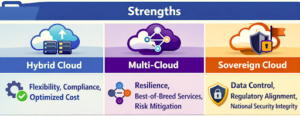
Taken together, these models empower governments to innovate securely and reliably, while meeting citizens’ expectations in a rapidly changing digital world. Whether it’s managing large AI workloads or scaling public services on demand, the combination of hybrid, multi, and sovereign cloud infrastructure has become a strategic necessity.
Larsen & Toubro‑Vyoma — Your Cloud Infrastructure Partner
At the forefront of this transformation is Larsen & Toubro‑Vyoma, bringing proven reliability and engineering excellence to cloud infrastructure in India and beyond. With a strong foundation rooted in hyperscale data centres, managed cloud services, AI‑readiness, and robust security, Vyoma enables public sector clients to:
- Deploy hybrid cloud environments with seamless orchestration
- Manage multi‑cloud platforms with governance and control
- Utilize sovereign cloud platforms designed for compliance and security
From IaaS and PaaS to advanced GPU‑as‑a‑Service offerings, Vyoma’s cloud ecosystem is engineered to handle the most demanding, secure, and regulated workloads.
Cloud Adoption Statistics & Growth
📊 Cloud Model Adoption Forecast (Projected by 2027)
Note: This illustrates industry‑wide trends, not specific to one provider.
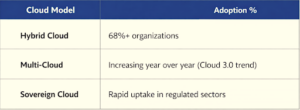
These trends highlight the trajectory of modern cloud adoption — where flexibility, performance, compliance, and sovereignty are key decision drivers.
Conclusion
As digital transformation accelerates across the public sector, the cloud infrastructure that supports it must be secure, resilient, flexible, and compliant. Hybrid Cloud, Multi‑Cloud, and Sovereign Cloud are not mutually exclusive — instead, they form an ecosystem that modern public sector organizations can leverage to meet evolving needs.
With Larsen & Toubro‑Vyoma’s industry expertise and advanced cloud infrastructure portfolio, public sector and regulated enterprises can confidently navigate this cloud‑first world, achieving performance at scale without compromising security or sovereignty.
How the DPDP Act Is Reshaping India’s Data Centre and Cloud Compliance Landscape
Posted on March 15th, 2026
In the digital age, data is more than just information — it is the backbone of business innovation, customer engagement, and secure digital transformation. With increasing reliance on cloud computing, AI, and hyperscale data operations, enterprises must re-evaluate not only their technology stacks but also their compliance strategies. The Digital Personal Data Protection (DPDP) Act, 2023 is the cornerstone of this transformation in India, fundamentally reshaping how organizations approach data management, privacy, and infrastructure compliance.
For companies like Larsen & Toubro‑Vyoma, the DPDP Act is not merely a regulatory text — it has become a strategic impetus in building secure, sovereign, and compliant cloud and data centre environments that meet emerging enterprise and government requirements.
Understanding the DPDP Act: India’s New Data Protection Framework
The Digital Personal Data Protection (DPDP) Act, 2023 is India’s first dedicated legislation that governs the collection, processing, storage, and security of personal data. Passed by Parliament and supported by detailed rules like the DPDP Rules 2025, it introduces a consent-first model that places individual privacy at the heart of digital operations.
Unlike the older, fragmented framework under the IT Act, the DPDP Act creates clearly defined responsibilities for data fiduciaries (entities that determine how and why personal data is processed) and data principals (individuals whose data is processed). It also establishes a Data Protection Board of India with enforcement and adjudication powers.
Why DPDP Matters for Data Centres and Cloud Services
Cloud and data centre platforms — especially ones that host sensitive personal or enterprise data — are at the frontlines of DPDP compliance. The DPDP Act’s consent, minimisation, and security‑first stipulations make it mandatory for digital infrastructure providers to implement robust privacy practices.
For organisations such as Larsen & Toubro‑Vyoma, which delivers hyperscale data centre solutions, sovereign cloud platforms, and managed services, DPDP compliance must be part of the core infrastructure and governance architecture.
Key Compliance Imperatives under DPDP
Consent Management & Data Governance
Under the DPDP Act, personal data collection and processing are only lawful when explicit user consent is obtained and verifiable. This means cloud and infrastructure providers must support streamlined consent systems and audit trails that regulators can review.
Data Minimisation and Purpose Limitation
Cloud and data centre providers hosting workloads must ensure that only necessary personal data is processed, and only for defined purposes aligned with consent. Systems that automate data lifecycle policies — from collection to deletion — are essential.
Data Security and Breach Reporting
The DPDP Act mandates strong technical and organizational security safeguards, and timely reporting in the event of a breach. For hyperscale and sovereign cloud platforms like those provided by Larsen & Toubro‑Vyoma, embedding real‑time threat detection, identity management, and audit controls is crucial.
How Larsen & Toubro‑Vyoma is Enabling DPDP‑Ready Cloud & Data Centre Compliance
Larsen & Toubro‑Vyoma has emerged as a leader in building infrastructure that blends performance with security, sovereignty, and compliance. Its core offerings ensure that enterprises can meet both regulatory and operational challenges in a DPDP landscape.
Sovereign Cloud Platforms
In early 2026, Larsen & Toubro‑Vyoma launched its Sovereign Cloud Platform (SCP) — a cloud infrastructure purpose‑built for India’s regulatory environment. SCP ensures all workloads and data remain within Indian jurisdiction, reducing risks of foreign legal exposure and ensuring data governance complies with domestic laws like the DPDP Act.
The SCP supports:
- Air‑gapped deployment for sensitive government or critical infrastructure workloads.
- Compliance‑centric identity and access governance.
- Encryption and audit controls that align with advanced privacy frameworks.
This design helps enterprises accelerate AI‑driven workloads while maintaining compliance with privacy and sovereignty requirements.
AI‑Ready Data Centre & Managed Services
From hyperscale data centres to GPU‑as‑a‑Service and managed network and security services, Larsen & Toubro‑Vyoma provides an ecosystem that makes DPDP readiness operational rather than a compliance afterthought.
Their managed services include:
- Continuous threat monitoring
- Security incident response
- Backup as a Service (BaaS) with secure, encrypted data retention
- Infrastructure assessment for compliance gaps
A Strategic Advantage: DPDP Compliance as a Business Enabler
Complying with the DPDP Act is not just about avoiding penalties; it is about gaining competitive advantage. Organisations that can demonstrate trust, privacy safeguards, and sovereign data governance are more likely to build customer confidence — especially in sectors like finance, healthcare, and public services where personal data processing is high.
By providing secure infrastructure with embedded compliance — especially through Sovereign Cloud and managed services — Larsen & Toubro‑Vyoma enables customers to innovate without compromising on legal obligations.
Future‑Ready Data Compliance: Insights & Projections
The DPDP framework is still evolving, and enterprises are actively learning how to operationalise compliance in real infrastructure. Many privacy experts and regulators note that businesses must accelerate investments in data governance technologies to be ready before the full enforcement deadline of May 2027.
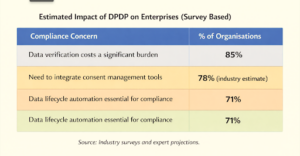
Below is a simple statistical snapshot of compliance impact:
📌 Estimated Impact of DPDP on Enterprises (Survey Based)
Conclusion
The Digital Personal Data Protection (DPDP) Act is a transformative milestone for India’s data governance ecosystem. It pushes enterprises and cloud‑infrastructure providers to embrace privacy, transparency, and sovereignty as foundational principles, not add‑ons.
For forward‑thinking organisations, partnering with a provider like Larsen & Toubro‑Vyoma ensures that compliance becomes a competitive differentiator — not just a regulatory checkbox. Whether through sovereign cloud deployment, managed security services, or AI‑ready data infrastructure, this marriage of scale and compliance is shaping the future of data centres in India.
Agentic AI in Banking: The Rise of Autonomous Transactions & Cloud‑Native Execution
Posted on March 10th, 2026
In the era of digital transformation, the financial services industry is undergoing one of its most significant technological revolutions — driven by Agentic Artificial Intelligence (AI), autonomous banking workflows, and cloud‑native execution platforms that enable real‑time, scalable, and secure financial operations. As banks strive to enhance efficiency, improve customer experience, and reduce operational complexities, they are increasingly adopting technologies that go beyond traditional automation to deliver autonomy, intelligence, and rapid execution at scale.
In this landscape, Larsen & Toubro-Vyoma stands out as a leading technology infrastructure provider enabling secure, scalable, and sovereign cloud environments where advanced AI capabilities, including agentic systems, can be deployed with confidence.
Understanding Agentic AI in Banking
Agentic AI represents a new class of artificial intelligence that can independently perceive, reason, plan, and execute complex sequences of tasks without continuous human supervision. Traditional AI and rule‑based automation systems required predefined steps and clear human control. In contrast, agentic AI can autonomously make decisions, adapt to context changes, and even execute transactions and operations with minimal human input.
For banking transformation, this means AI agents can:
- Automatically approve standard loan requests within defined guidelines
- Execute transactions based on customer intent
- Detect and prevent fraud in real time
- Dynamically reallocate risk capital across portfolios
A recent study by Deloitte highlights how agentic AI is transforming banking workflows — enabling institutions to automate reasoning and complex task orchestration previously attended by humans, including compliance checks and intelligent processing.
Why Autonomous Transactions Matter
The shift toward autonomous banking is driven by customer demand for faster, smarter, and more personalized services. For example, traditional online banking requires manual inputs for transactions, loan processing, or account updates. With agentic AI:
✔ Customers can initiate financial requests through natural language or voice, and the AI agent can interpret intent, verify compliance, and execute the transaction seamlessly.
✔ Banks can automate backend workflows with deeper context awareness, meaning tasks like account reconciliation, risk evaluation, and fraud alerts occur in the background without human intervention.
✔ Real‑time decision‑making increases operational efficiency while reducing human error and turnaround times.
According to FinTech Magazine, Banks like Lloyds Banking Group are already experimenting with agentic AI frameworks that manage over 21 million accounts autonomously, underscoring the rapid industry adoption of these technologies.
Cloud‑Native Execution: The Foundation for Intelligent Banking
For agentic AI systems to be truly autonomous, they must operate on a cloud‑native infrastructure — one that is scalable, resilient, secure, and optimized for high‑performance AI workloads. This is where cloud‑native execution plays a pivotal role, enabling agentic systems to integrate, compute, and respond in real time.
What Cloud‑Native Execution Means
Cloud‑native execution refers to software architectures that leverage microservices, containerization, orchestration platforms (like Kubernetes), and modern APIs — allowing distributed, scalable, and secure execution of applications. These environments are essential for running agentic AI workloads that require:
- High availability and elastic scalability
- Distributed computing for real‑time decision engines
- Secure APIs for integration with core banking systems
- Compliance and data sovereignty controls
Larsen & Toubro‑Vyoma’s sovereign cloud platform exemplifies this approach, providing highly secure, scalable cloud infrastructure designed for AI‑native workloads where banks and financial institutions can safely deploy agentic systems without sacrificing data control or compliance.
Key Benefits of Agentic AI + Cloud‑Native Execution in Banking
🔹 Autonomous Transactions
Banking operations such as transfers, payments, or scheduled investments can now be handled end‑to‑end without human intervention — reducing processing times from hours to seconds and minimizing operational overhead.
🔹 Enhanced Compliance & Security
Cloud‑native agentic systems can audit, log, and manage regulatory requirements in real time — maintaining governance even as workflows are autonomously executed.
🔹 Improved Risk Management
Agentic AI systems have advanced pattern recognition and decision‑intelligence allowing them to assess risk dynamically. They can initiate corrective actions like freezing suspicious activity and notifying stakeholders instantaneously.
🔹 Higher Customer Satisfaction
By leveraging real‑time autonomous execution, financial institutions can provide faster services, personalized insights, and predictive financial solutions that anticipate customer needs.
Cloud‑Native vs. Traditional Execution Performance
A bar graph comparing latency, cost, and scalability differences between on‑premises and cloud‑native execution systems.
Agentic AI Adoption in Banking
Pie chart showing percentage adoption across front‑office, back‑office, and compliance operations.
These stats help banks visualize ROI impact and adoption trends of agentic, autonomous workflows and the cloud infrastructure needed to support them.
Future Directions: What’s Next?
Agentic AI is not a buzzword — it’s reshaping the financial industry and will continue to evolve as:
- Regulatory frameworks mature to govern autonomous decision‑making in finance.
- Agentic systems become more integrated with core banking platforms via secure APIs.
- Cloud‑native infrastructures like those from Larsen & Toubro‑Vyoma support next‑generation AI‑ready workloads safely and scalably.
The future of banking is intelligent, autonomous, and cloud connected — with agentic AI driving real‑time execution, lower costs, and unprecedented growth opportunities.
Conclusion
Agentic AI and cloud‑native execution mark a new frontier in financial services, fundamentally altering how banks operate, automate, and deliver customer value. With technologies that power autonomous transactions and secure real‑time execution, the future of banking is faster, smarter, and more responsive than ever.
Platforms like Larsen & Toubro‑Vyoma’s sovereign cloud provide the robust infrastructure necessary for institutions to adopt and scale these innovations, ensuring that autonomy does not compromise compliance or security.
As the financial world embraces this shift, organizations that harness the power of agentic AI and cloud‑native execution will lead the next wave of digital transformation in the banking industry.
How AI Cloud Computing Is Powering Hyper-Personalized Marketing at Scale
Posted on March 5th, 2026
In today’s digital-first economy, personalization is no longer a competitive advantage—it is a necessity. Customers expect brands to understand their preferences, predict their needs, and deliver tailored experiences in real time. This shift has led to the rise of hyper-personalized marketing, powered by AI cloud compute.
At the forefront of this transformation is Larsen & Toubro-Vyoma, a next-generation AI cloud and digital infrastructure platform that is enabling enterprises to scale personalization with speed, security, and precision.
The Rise of Hyper-Personalized Marketing
Hyper-personalization goes beyond traditional segmentation. It uses real-time data, behavioral insights, and artificial intelligence to deliver individualized experiences across channels.
Modern enterprises leverage:
- Customer behavior tracking
- Predictive analytics
- AI-driven recommendations
- Real-time engagement systems
However, achieving this at scale requires immense computing power and data processing capabilities—this is where AI cloud infrastructure becomes critical.
📊 Statistics: Why Hyper-Personalization Matters:
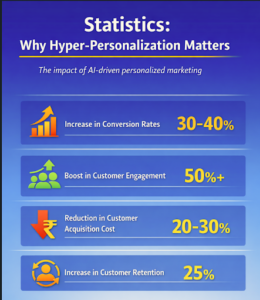
These numbers highlight why enterprises are rapidly adopting AI-powered cloud ecosystems like Larsen & Toubro-Vyoma.
Why AI Cloud Compute Is the Backbone of Personalization
AI-driven marketing requires processing vast volumes of data—from customer interactions to transactional histories. Traditional infrastructure often struggles with such dynamic workloads.
Larsen & Toubro-Vyoma addresses this challenge through its AI-first cloud ecosystem, which combines:
- High-performance GPU computing
- Scalable cloud infrastructure (IaaS, PaaS)
- Advanced data storage and processing
- Real-time analytics
Its platform is purpose-built for compute-intensive AI workloads, enabling seamless execution of personalization engines.
AI + Cloud = Real-Time Personalization at Scale
With AI cloud compute, businesses can:
- Analyze customer data in milliseconds
- Generate personalized content dynamically
- Optimize campaigns in real time
- Deliver seamless omnichannel experiences
Larsen & Toubro-Vyoma enables this through a unified AI-native cloud environment integrating infrastructure, data, and AI capabilities.
Key Industry Use Cases:
- E-commerce: Personalized product recommendations
- BFSI: AI-based financial suggestions
- Healthcare: Tailored patient communication
- Telecom: Real-time usage-based offers
The Role of GPU Cloud in Marketing Intelligence
AI models used in marketing require significant computational power. Training and deploying these models involves processing massive datasets.
Larsen & Toubro-Vyoma’s GPU Cloud offers:
- High-density compute for AI workloads
- Faster model training and deployment
- Low-latency processing for real-time insights
Data Sovereignty and Trust in Personalization
Hyper-personalization relies heavily on customer data, making security and compliance critical.
Larsen & Toubro-Vyoma ensures:
- Data sovereignty within India
- Regulatory compliance
- Secure storage and processing
- Enterprise-grade protection
This is especially important for sectors like BFSI, healthcare, and government.
Enabling Scalable Marketing Infrastructure
To deliver hyper-personalized experiences across millions of users, infrastructure must be:
- Scalable
- Reliable
- Secure
Larsen & Toubro-Vyoma’s hyperscale data centers provide:
- High-density compute environments
- 24/7 monitoring
- Enterprise-grade uptime
- Robust backup systems
Supporting AI Innovation with Sustainable Infrastructure
As AI adoption increases, so does the need for sustainable computing.
Larsen & Toubro-Vyoma integrates:
- Energy-efficient data centers
- Advanced cooling technologies
- Low-carbon infrastructure
This ensures businesses can scale AI responsibly.
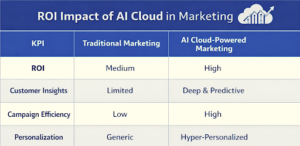
📈 ROI Impact of AI Cloud in Marketing
The Future of Marketing with AI Cloud
The future of marketing lies in:
- Autonomous AI systems
- Predictive customer journeys
- Real-time decision engines
- Fully personalized ecosystems
Larsen & Toubro-Vyoma is building this future by combining AI, cloud, and hyperscale infrastructure into a unified platform.
Trusted Cloud Service Providers for Enterprises in India: What to Look For
Posted on February 23rd, 2026
As digital transformation accelerates across industries, enterprises are rapidly shifting toward enterprise cloud solutions to improve scalability, efficiency, and security. In India’s fast-growing digital economy, choosing the right cloud partner is no longer optional—it is strategic. From data protection to uptime assurance, the need for secure cloud services and robust cloud reliability standards has become critical.
However, with multiple providers offering similar services, conducting a thorough cloud service provider comparison is essential before making a long-term commitment. Enterprises must evaluate technical expertise, infrastructure capabilities, compliance frameworks, and long-term scalability before finalizing their cloud partner.
This guide outlines what enterprises in India should look for when selecting a trusted cloud service provider—and why Larsen & Toubro-Vyoma stands out as a reliable choice.
Why Enterprises Need Advanced Enterprise Cloud Solutions
Modern enterprises operate in a dynamic environment shaped by rapid technological advancements, evolving customer expectations, and intense competitive pressures. From AI integration and data analytics to IoT deployment and ERP modernization, organizations require agile and scalable solutions to stay ahead. Cloud infrastructure empowers seamless scalability, innovation, and operational efficiency—capabilities that traditional IT infrastructures can no longer effectively support.
Enterprise cloud solutions offer a wide range of benefits, including:
- Enhanced agility, enabling businesses to respond quickly to changing market demands
- Scalability and flexibility, with elastic, auto-scaling capabilities that support seamless expansion
- Reduced cybersecurity risks through robust, multi-layered security frameworks
- Regulatory compliance, ensuring adherence to industry standards and legal requirements
- Cost optimization with pay-as-you-go pricing models, eliminating unnecessary infrastructure expenses
- Best disaster recovery and business continuity, ensuring minimal downtime and data protection
- Centralized data management, allowing better control, visibility, and accessibility of information
- Faster deployment cycles, accelerating time-to-market for applications and services
- Data-driven decision-making, powered by advanced analytics and insights
- Efficient distributed managed services, supported by a skilled and scalable workforce
In India, where enterprises operate across multiple states with diverse regulatory frameworks, cloud infrastructure must also comply with local data residency requirements and industry-specific regulations. This makes selecting the right cloud provider a critical decision for ensuring security, compliance, and long-term scalability.
Key Factors to Consider While Choosing a Cloud Provider in India
1. Cloud Reliability: Uptime and Infrastructure Strength
Reliability forms the backbone of any cloud ecosystem. Enterprises—especially in sectors such as banking, telecom, healthcare, and manufacturing—cannot afford downtime. Even a five-minute outage can disrupt thousands of transactions and significantly impact business operations.
When evaluating cloud reliability in India, consider:
- Data center redundancy
- Tier III or Tier IV infrastructure
- Network latency performance
- Disaster recovery capabilities
- Outcome-based SLAs and structured governance frameworks for assured service delivery
A trusted provider like Larsen & Toubro-Vyoma delivers enterprise-grade infrastructure supported by robust engineering expertise and a resilient architecture built for mission-critical operations, ensuring a 99.99% uptime SLA.
2. Secure Cloud Services: Security and Compliance
Security remains the top concern for enterprises migrating to the cloud. With increasing cyber threats and data breaches, businesses must prioritize secure cloud services.
Look for providers offering:
- End-to-end encryption
- Zero-trust architecture
- Multi-layer firewall protection
- Identity and access management (IAM)
- Robust cybersecurity frameworks
- Regular security audits
- Compliance with global and Indian standards, including ISO, SOC, DPDP Act, RBI guidelines, CERT-In, GDPR (where applicable), and IT regulations
- Advanced threat prevention measures such as SOC monitoring, anomaly detection, SIEM/SOAR, and ransomware protection
Larsen & Toubro-Vyoma integrates advanced cybersecurity frameworks into its enterprise cloud solutions, ensuring businesses operate with confidence and compliance.
3. Scalability and Customization
Every enterprise has unique operational requirements. A retail company’s cloud architecture differs from a fintech or manufacturing enterprise.
A reliable cloud partner should therefore provide flexible and tailored solutions, including:
- Public, private, and hybrid cloud deployment models
- Faster deployment and reduced time-to-market
- Accelerated innovation with industry-specific customization
- Elastic scalability to efficiently handle peak workloads
- Cloud-native application modernization
- Integration of AI and advanced analytics capabilities
- Multi-cloud management and seamless interoperability
During your cloud service provider comparison, assess whether the provider supports seamless scaling without major infrastructure overhauls.
4. Data Localization and Regulatory Compliance in India
India has evolving data governance and localization policies. Enterprises must ensure sensitive data remains compliant with national guidelines.
Trusted enterprise cloud solutions in India should:
- Adhere to Indian regulatory requirements
- Comply with the Digital Personal Data Protection Act (DPDP)
- Align with SEBI data retention norms
- Meet RBI and IRDAI cloud advisory guidelines
- Follow the CERT-In cybersecurity framework
- Enable sovereign cloud capabilities
- Provide local data hosting within India
- Support regulatory audits and compliance checks
- Ensure secure backup and disaster recovery within national boundaries
- Offer comprehensive documentation for compliance validation
Larsen & Toubro-Vyoma has deep expertise in India’s regulatory environment and delivers dependable, compliant cloud solutions, including its advanced Sovereign Cloud Platform.
5. Integration Capabilities with Existing Systems
Cloud migration should not disrupt ongoing business operations. Enterprises need providers that support smooth integration with:
- Legacy systems
- ERP platforms
- CRM tools
- Data warehouses
- IoT devices
- SaaS Platforms
A strong cloud partner offers migration planning, workload assessment, and minimal downtime transition strategies.
6. Transparent Pricing and Cost Efficiency
While cloud reduces capital expenditure, enterprises must evaluate long-term operational costs.
During your cloud service provider comparison, consider:
- Transparent billing models
- No hidden charges
- Pay-as-you-scale flexibility
- Cost optimization dashboards
- Resource monitoring dashboards
- Strong FinOps capabilities
The right enterprise cloud solutions provider will help businesses optimize performance without inflating costs.
7. Strong Technical Support and Managed Services
Cloud infrastructure requires continuous monitoring and optimization. Enterprises should prioritize providers offering:
- 24/7 technical support
- Dedicated managers
- Proactive monitoring
- Performance analytics and incident response teams
- A comprehensive suite of managed services tools
- Dedicated account and delivery managers
Larsen & Toubro-Vyoma offers comprehensive managed services that go beyond infrastructure deployment, ensuring sustained operational excellence.
Benefits of Partnering with a Trusted Cloud Provider
When enterprises choose secure and reliable cloud services, they gain:
- Improved business continuity
- Faster innovation cycles
- Reduced IT maintenance overhead
- Enhanced collaboration
- Advanced data insights
- Competitive market advantage
In India’s competitive enterprise landscape, digital agility is essential. Cloud infrastructure is no longer just IT support—it is a strategic growth enabler.
Why Larsen & Toubro-Vyoma is a Trusted Choice
Enterprises seeking robust enterprise cloud solutions need a provider that combines engineering excellence with digital innovation. Larsen & Toubro-Vyoma delivers:
- Enterprise-grade infrastructure
- High cloud reliability India standards
- Secure cloud services with multi-layered protection
- Industry-specific solutions
- Regulatory compliance support
- Dedicated managed services
Backed by strong engineering excellence, technical and domain expertise, and a deep understanding of enterprise needs, Larsen & Toubro-Vyoma empowers organizations to transition confidently into the digital future, making them a trusted partner for enterprise cloud transformation in India.
Final Thoughts: Making the Right Cloud Service Provider Comparison
Choosing the right cloud partner is a long-term strategic decision. Enterprises must evaluate providers not just on cost but on reliability, security, scalability, compliance, and support.
A structured cloud service provider comparison ensures:
- Risk mitigation
- Stronger ROI
- Seamless migration
- Future-ready infrastructure
In India’s rapidly evolving digital ecosystem, enterprises need trusted partners that deliver secure cloud services with proven reliability. With strong infrastructure capabilities and enterprise-focused solutions, Larsen & Toubro-Vyoma stands as a dependable partner for businesses looking to scale confidently.
By focusing on performance, protection, and precision, enterprises can unlock the full potential of cloud transformation and drive sustainable growth.
Top AI Use Cases in Indian Enterprises & How Larsen & Toubro-Vyoma Enables Them
Posted on February 16th, 2026
Artificial Intelligence (AI) is no longer a futuristic concept — it’s powering real business outcomes across Indian enterprises today. From automating decision‑making processes to improving customer experiences in regulated industries like finance and healthcare, AI is reshaping how Indian organisations operate. With the rapid pace of digitisation, AI adoption in India has accelerated, driven by demand for efficiency, scalability, and competitive differentiation.
But enterprise AI transformation requires more than just software — it needs a robust, secure, and scalable foundation. This is where Larsen & Toubro‑Vyoma steps in. As a technology-forward solution provider delivering AI-ready cloud and data centre capabilities, Larsen & Toubro-Vyoma empowers enterprises to deploy powerful AI use cases at scale.
In this blog, we’ll explore key AI use cases enterprises are adopting in India and how Larsen & Toubro‑Vyoma AI use cases support these initiatives with purpose‑built infrastructure and services.
1. Enhancing Customer Engagement with Conversational AI
One of the most widespread applications of AI in enterprises is conversational AI — intelligent chatbots and virtual assistants that handle customer queries 24/7 without human intervention.
In sectors like financial services, AI‑powered chat platforms assist customers with account balances, transaction details, fraud alerts, and service requests in multiple Indian languages. This dramatically improves response times and customer satisfaction, especially for organisations with diverse user bases. Integrating these systems with enterprise core banking platforms requires high‑performance cloud and AI infrastructure.
By enabling GPU‑accelerated compute and secure data pipelines, Larsen & Toubro‑Vyoma AI use cases help enterprises deploy conversational AI models that meet both compliance and scalability needs.
2. Predictive Analytics for Operational Efficiency
Predictive analytics uses AI and machine learning (ML) to forecast trends based on historical data. Indian enterprises are leveraging these insights to optimise supply chains, predict equipment failures, and streamline inventory management.
For instance, manufacturers use AI models to anticipate maintenance needs — reducing downtime and operational costs — while retailers forecast demand to prevent stockouts.
These AI workloads are compute‑intensive and need GPU‑ready environments to train and run models effectively. With its AI‑ready platforms and GPU cloud services, Larsen & Toubro‑Vyoma provides enterprises with the infrastructure to develop and scale predictive analytics solutions securely and reliably.
3. Fraud Detection & Risk Management in Financial Services
India’s fast-growing banking and FinTech ecosystem is among the largest beneficiaries of AI adoption. AI-powered systems can analyze millions of transactions in real time to detect anomalies that may indicate fraud or money laundering. This enables financial institutions to strengthen regulatory compliance while safeguarding customer assets.
AI in financial services goes beyond fraud detection. It includes credit scoring using alternative data, automated underwriting, risk profiling, and personalised financial advice via AI‑driven tools.
Larsen & Toubro‑Vyoma’s secure hyperscale cloud infrastructure makes it possible for banks and financial enterprises to deploy these advanced AI models with strict security and compliance controls — all while supporting regulatory requirements that demand data sovereignty and protection.
4. Intelligent Document Processing
Many enterprise processes still rely on handling large volumes of unstructured data — invoices, contracts, legal forms, and regulatory filings. AI‑powered document processing engines use optical character recognition (OCR) and natural language processing (NLP) to extract meaningful insights from these documents automatically.
In industries like insurance and financial services, this translates into faster claims processing, reduced manual errors, and improved turnaround times.
The success of these AI models depends on high throughput computing and secure integration with enterprise systems — capabilities that Larsen & Toubro‑Vyoma AI use cases provide through scalable compute resources and tightly managed hybrid cloud environments.
5. AI‑Driven Personalisation in Marketing & Sales
Enterprises across telecom, retail, and BFSI are using AI to personalise customer journeys. From product recommendations to targeted marketing campaigns, AI helps businesses engage more effectively with customers by delivering relevant content and offers.
Marketing automation platforms that leverage AI require both robust AI model execution and real‑time data processing. Supported by Larsen & Toubro‑Vyoma’s cloud services, enterprises can deploy real‑time analytics engines that power personalisation at scale without compromising security.
6. Regulatory Compliance & Automated Reporting
With increasing regulatory scrutiny, enterprises must ensure accurate and timely reporting across functions such as taxation, finance, and risk management. AI helps automate compliance workflows — flagging exceptions, generating reports, and maintaining audit trails.
Especially in highly regulated sectors such as banking and financial services, compliance failures can lead to severe penalties and reputational risk. AI systems operating on resilient, secure infrastructure make compliance processes more reliable, traceable, and audit-ready — a distinct advantage for organizations leveraging Larsen & Toubro-Vyoma’s legal, documentation, and secure cloud solutions to strengthen their governance and compliance frameworks.
Why Indian Enterprises are Accelerating AI Adoption
The AI revolution in India isn’t just happening — it’s accelerating due to several factors:
- Increased Data Availability: Enterprises now have vast amounts of customer and operational data — a prerequisite to effective AI models.
- Rising Demand for Real‑Time Insights: Industries like FinTech, manufacturing, and e‑commerce require instant insights to stay competitive.
- Government Initiatives: Policies promoting digital adoption and data sovereignty have encouraged enterprises to invest in robust, home‑grown infrastructure.
- COVID‑Driven Digital Shift: The pandemic accelerated remote services and automation, making digital transformation and AI adoption core to business continuity.
With these trends, Indian enterprises are not just adopting AI — they are leveraging it to redefine business processes, enhance efficiency, and drive innovation at scale.
How Larsen & Toubro‑Vyoma Enables Enterprise AI Transformation
To implement these AI use cases effectively, enterprises need a foundation that supports high‑performance computing, data security, scalability, and compliance. That’s where Larsen & Toubro‑Vyoma comes in.
- ✔ AI‑Ready Infrastructure: Larsen & Toubro-Vyoma’s GPU-enabled cloud platforms and hyperscale data centres are engineered for today’s most demanding AI workloads, providing next-generation computing power and cloud ecosystem support.
- ✔ Secure Managed Services: From real-time threat monitoring to compliance-ready environments and identity management, Larsen & Toubro-Vyoma’s managed services ensure robust security and operational protection for enterprise systems.
- ✔ Scalable Cloud Capabilities: Flexible computing models — spanning public, private, and hybrid cloud — let enterprises grow without constraints while supporting high-density AI, ML, and data workflows.
- ✔ Sustainable Solutions: Larsen & Toubro-Vyoma’s green data centre initiatives deliver high-performance support for AI workloads while advancing sustainability, backed by recognized certifications including ISO 14001:2015 (Environmental Management), ISO 27001:2022 (Information Security) and Uptime Institute Tier III design and constructed facilities certifications.
Conclusion
Artificial Intelligence is the engine of modern enterprise innovation — especially in industries like financial services, manufacturing, retail, and public sector. Indian organisations are rapidly embracing AI use cases enterprises to stay competitive and enhance customer experiences. However, successful implementation hinges on resilient infrastructure, robust security, and scalable cloud capabilities.
Larsen & Toubro-Vyoma’s integrated digital infrastructure—anchored in hyperscale data centres, GPU-optimized cloud platforms, and end-to-end managed services—enables organisations to unlock the full power of AI. From AI-enabled financial services to predictive analytics and automation, Larsen & Toubro-Vyoma is a trusted partner in driving AI-led transformation and growth.
What Makes Larsen & Toubro-Vyoma the Preferred Hyperscale Data Center Partner in India
Posted on February 16th, 2026
India’s digital transformation is accelerating at an unprecedented pace. From AI-driven enterprises and fintech platforms to OTT ecosystems and government digitization initiatives, the demand for powerful and scalable digital infrastructure continues to rise rapidly.
At the center of this transformation is a new generation of AI-native hyperscale data centers in India capable of supporting next-generation workloads such as artificial intelligence, machine learning, high-performance computing, and real-time cloud applications.
Emerging as a powerful force in this space is Larsen & Toubro-Vyoma, an enterprise-grade data center and cloud infrastructure platform designed to power India’s digital future. With a strong focus on AI-native architecture, Neo-cloud infrastructure, sustainability, and enterprise reliability, Larsen & Toubro-Vyoma is redefining what modern hyperscale infrastructure looks like in India.
The Rise of AI-Native Hyperscale Infrastructure in India
The explosion of technologies such as generative AI, cloud computing, 5G networks, IoT ecosystems, and digital finance platforms has drastically increased the scale and complexity of data workloads.
Traditional data centers are no longer sufficient to handle these evolving demands. Enterprises today require AI-optimized infrastructure capable of supporting high-density GPU clusters, ultra-low latency processing, and massive compute scalability.
This shift is accelerating the adoption of AI-native hyperscale data centers that are designed to:
- Support GPU-accelerated AI and HPC workloads
- Enable Neo-cloud infrastructure models
- Deliver high-density rack deployments
- Provide ultra-low latency processing
- Ensure enterprise-grade reliability and uptime
Larsen & Toubro-Vyoma is positioned at the forefront of this transformation, building infrastructure that is purpose-built for the AI-first digital economy.
Larsen & Toubro-Vyoma’s Vision: Building India’s Next-Generation AI Data Infrastructure
Larsen & Toubro-Vyoma is more than a traditional data center provider. It is emerging as an AI-native digital infrastructure and cloud platform designed to support the next era of enterprise computing.
Larsen & Toubro-Vyoma’s long-term vision is centered on building future-ready digital ecosystems that power:
- Enables advanced AI research and training workloads, helping organizations leverage the full potential of artificial intelligence.
- Supports the development of next-generation neo-cloud platforms and hyperscale cloud deployments for seamless scalability and efficiency.
- Strengthens fintech and digital banking ecosystems with secure, fast, and reliable infrastructure.
- Facilitates the growth of edge computing networks, enabling real-time data processing and low-latency performance.
- Designed to handle large-scale enterprise applications, ensuring operational efficiency and business agility.
- Empowers organizations to accelerate digital transformation and stay competitive in a rapidly evolving technological landscape.
Through this vision, Larsen & Toubro-Vyoma is helping enterprises transition toward AI-driven infrastructure strategies that support rapid digital growth.
AI-Optimized Infrastructure for Enterprise and Cloud Workloads
Modern AI workloads require significantly higher compute density, power capacity, and cooling efficiency compared to traditional IT infrastructure.
Larsen & Toubro-Vyoma hyperscale facilities are designed to support:
High-Density AI Compute
Advanced infrastructure designed to support high-performance GPU clusters and AI training environments, aligned with global AI computing standards and integrated ecosystem partnerships.
Neo-Cloud Data Center Architecture
State-of-the-art facilities engineered to support cloud-native platforms, hyperscale cloud providers, and next-generation AI-driven enterprises.
Scalable Infrastructure Design
A flexible, modular architecture that allows enterprises and cloud providers to seamlessly scale infrastructure in response to growing workloads and evolving business demands.
Ultra-High Availability
Enterprise-grade reliability frameworks designed to support mission-critical workloads with minimal downtime.
This makes Larsen & Toubro-Vyoma an ideal partner for organizations building AI platforms, digital financial services, cloud-native applications, and large-scale enterprise systems.
Enterprise-Grade Solutions for Digital Businesses
Today’s enterprises require integrated digital infrastructure that supports performance, compliance, and security simultaneously.
Larsen & Toubro-Vyoma delivers enterprise data center and cloud infrastructure solutions that include:
Infrastructure & Hosting Solutions
- Hyperscale Colocation Services – Secure, scalable rack and cage space with high‑density compute capacity to support enterprise and cloud workloads.
- AI‑Ready Data Centers – Purpose‑built facilities engineered for high‑performance AI, machine learning and GPU‑intensive computing.
- GPU as a Service (GPUaaS) – GPU‑powered compute available as a service to accelerate AI, analytics and HPC workloads.
Cloud & Platform Services
- Public Cloud – Flexible IaaS, PaaS and SaaS deployment models with reliable performance and scalable infrastructure.
- Private & Sovereign Cloud Platforms – Dedicated, compliant cloud environments designed for data sovereignty and regulated industries.
- Hybrid Cloud Management – End‑to‑end integration, orchestration and support for mixed public, private and on‑premises cloud setups.
Managed & Professional Services
- Full Lifecycle Managed Services – Consulting, migration, deployment, optimization, monitoring and ongoing cloud and infrastructure support.
- Network & Security Services – Comprehensive security frameworks including perimeter protection, firewall management, IAM and DDoS defense.
- Migration & Support Services – Assistance with seamless transition from legacy systems to cloud and modern digital platforms.
Advanced Technology Enablement
- AI & Machine Learning Ready Platforms – Optimized infrastructure for modern AI/ML workloads with scalable compute and network performance.
- High‑Performance Computing (HPC) – Capabilities to support complex simulations, analytics, scientific computing and GPU‑accelerated processing.
- Cloud‑Native & Microservices Support – Next‑generation stacks enabling containerized and cloud‑native architectures (IaaS, CaaS, PaaS).
Operational Excellence & Sustainability
- 24/7 Monitoring & Support – Dedicated expert teams ensuring round‑the‑clock performance and reliability.
- Robust Security & Governance – Enterprise‑grade controls, compliance support and secure infrastructure across all layers.
- Environmental Sustainability – Energy‑efficient operations, water conservation, renewable power initiatives and zero‑waste management practices.
- High‑Performance Connectivity – Low‑latency network access and high‑throughput data transfer capabilities across facilities.
These solutions support industries such as BFSI, fintech, healthcare, e-commerce, telecom, SaaS platforms, and government digital infrastructure programs.
Sustainability Leadership in Hyperscale Infrastructure
As hyperscale infrastructure grows, sustainability becomes a critical priority for digital infrastructure providers.
Larsen & Toubro-Vyoma integrates advanced green technologies and renewable energy strategies into its facilities to build environmentally responsible data ecosystems.
Key sustainability initiatives include:
- Hybrid renewable energy integration
- Battery Energy Storage Systems (BESS) for grid stability
- Round-the-clock renewable energy infusion
- Advanced liquid and precision cooling technologies
- Net-zero water systems for minimal water consumption
- Low-carbon infrastructure design
Larsen & Toubro-Vyoma facilities are designed to meet IGBC Platinum certification standards, reflecting global best practices in sustainable infrastructure development.
These initiatives ensure that enterprise customers benefit from high-performance infrastructure with significantly reduced environmental impact.
Industry-Leading Compliance and Fintech-Grade Certifications
Security and compliance are critical for industries such as digital banking, fintech platforms, payment systems, and regulated enterprise sectors.
Larsen & Toubro-Vyoma data centers are designed to meet the highest international standards for security, operational resilience, and regulatory compliance, including certifications such as:
- ISO 27001:2022 – Information Security Management System ensuring a structured framework for protecting sensitive information and managing cyber risks.
- ISO 27701:2019 – Privacy Information Management System supporting strong governance for personal and sensitive data protection.
- ISO 27017:2015 – Cloud Security Standards designed specifically for secure cloud service environments.
- ISO 22301:2019 – Business Continuity Management ensuring operational resilience and uninterrupted service delivery during disruptions.
- ISO 20000-1:2018 – IT Service Management validating high-quality, standardized IT service operations.
These certifications make Larsen & Toubro-Vyoma infrastructure suitable for highly regulated digital financial ecosystems and enterprise workloads.
High-Efficiency Infrastructure and Advanced Performance
Energy efficiency plays a crucial role in hyperscale data center operations.
Larsen & Toubro-Vyoma facilities are designed with next-generation cooling, intelligent power management, and optimized infrastructure efficiency.
Key performance capabilities include:
- Optimized PUE range between 1.25 – 1.30
- High-density rack infrastructure for AI workloads
- Redundant power architecture
- Carrier-neutral connectivity ecosystems
- High-capacity network interconnections
These features ensure maximum performance, reliability, and energy efficiency for AI-native infrastructure environments.
Strategic Locations for India’s Digital Economy
Larsen & Toubro-Vyoma hyperscale infrastructure is strategically positioned to support India’s growing digital economy and cloud ecosystem.
Facilities are developed in locations that enable:
- High-capacity fiber connectivity
- Ultra-low latency data processing
- Proximity to major enterprise and financial hubs
- Integration with global cloud service providers
These strategically located hyperscale facilities strengthen India’s position as a global digital infrastructure hub.
Why Larsen & Toubro-Vyoma is Emerging as a Leader
Several factors position Larsen & Toubro-Vyoma as a rapidly emerging leader in AI-native hyperscale infrastructure in India:
- AI-optimized hyperscale architecture
- Enterprise-grade infrastructure reliability
- Neo-cloud ecosystem readiness
- Advanced sustainability initiatives
- Fintech-grade security and compliance
- Strategic infrastructure investments across India
As digital transformation accelerates, enterprises require infrastructure partners that can support AI-driven computing, massive data growth, and secure cloud environments.
Larsen & Toubro-Vyoma is uniquely positioned to meet these demands.
The Future of AI-Native Data Infrastructure in India
The next decade will witness exponential growth in AI computing, cloud platforms, digital finance, and edge infrastructure.
As India continues its journey toward becoming a global digital powerhouse, AI-native hyperscale data centers will form the backbone of this ecosystem.
With its forward-looking infrastructure strategy, strong sustainability focus, and enterprise-grade architecture, Larsen & Toubro-Vyoma is building the foundation for the next era of India’s digital infrastructure.
For enterprises seeking future-ready, AI-native hyperscale data centers in India, Larsen & Toubro-Vyoma stands out as a trusted partner powering the digital economy.
Business advantages on partnering with Laresen & Toubro-Vyoma
Posted on February 16th, 2026
In an era where digital transformation is no longer optional but essential, choosing the right cloud partner can make or break your business strategy. For Indian enterprises and government organizations seeking a powerful combination of cost efficiency, data sovereignty, and cutting-edge technology, Larsen & Toubro – Vyoma emerges as the definitive choice. This sovereign cloud India provider is revolutionizing how businesses approach cloud infrastructure while keeping data security and compliance at the forefront.
The Vyoma Advantage: More Than Just Another Cloud Provider
Vyoma cloud solutions represent a paradigm shift in how Indian organizations can leverage cloud technology without compromising on sovereignty, security, or sustainability. Unlike traditional hyperscalers, Vyoma understands the unique requirements of Indian businesses and government entities, offering tailored solutions that align with national priorities and regulatory frameworks.
The Vyoma data center infrastructure stands as a testament to India’s growing technological prowess, combining world-class facilities with indigenous innovation. These state-of-the-art facilities are strategically located across India, ensuring low latency, high availability, and complete data sovereignty—a critical factor for organizations handling sensitive information.
Cost-Effective Cloud Infrastructure: Smart Economics for Smart Businesses
One of the most compelling reasons to partner with Larsen & Toubro – Vyoma is the exceptional value proposition. Organizations can achieve 40% more cost-effectiveness compared to global hyperscalers, without sacrificing quality, performance, or capabilities. This significant cost advantage isn’t achieved through shortcuts but through operational excellence, optimized infrastructure design, and a deep understanding of the Indian market dynamics.
For enterprises operating on tight budgets or government departments managing public funds, this cost differential can translate into millions of rupees in annual savings. These savings can be redirected toward innovation, talent acquisition, or expanding digital initiatives—creating a virtuous cycle of growth and transformation.
The enterprise cloud services India market has long been dominated by international players, but Vyoma’s pricing model proves that Indian organizations don’t need to look overseas for world-class cloud infrastructure. The transparent pricing structure, combined with flexible consumption models, allows businesses to scale efficiently while maintaining predictable operational costs.
Sovereign & Compliant Data Hosting in India: Your Data, Your Country
In an increasingly interconnected world, data sovereignty has emerged as a critical concern for both private enterprises and government organizations. Sovereign cloud India solutions from Vyoma ensure that your data never leaves Indian shores, providing complete control and compliance with local regulations.
The government cloud infrastructure India requirements are particularly stringent, demanding robust security protocols, audit trails, and adherence to various compliance frameworks. Vyoma’s infrastructure is purpose-built to meet these exacting standards, making it the preferred choice for government departments, public sector undertakings, and organizations in regulated industries such as banking, healthcare, and defense.
Secure cloud solutions for government must address multiple layers of security—physical, network, application, and data. Vyoma’s comprehensive security framework includes advanced threat detection, encryption at rest and in transit, multi-factor authentication, and continuous monitoring. Regular security audits and compliance certifications provide additional assurance that your critical data remains protected against evolving cyber threats.
Beyond government requirements, private enterprises handling customer data, financial information, or intellectual property benefit immensely from sovereign data hosting. With data protection regulations becoming increasingly strict, partnering with Vyoma ensures compliance with current and future regulatory requirements while avoiding the complexities of cross-border data transfer restrictions.
Sustainable, Green Data Centers: Technology with Environmental Responsibility
Environmental sustainability is no longer a nice-to-have feature—it’s a business imperative. Vyoma’s commitment to sustainable, green data centers sets it apart in the Indian cloud landscape. The company has invested heavily in world-class cooling technologies that dramatically reduce energy consumption while maintaining optimal operating conditions for computing infrastructure.
Traditional data centers are notorious energy consumers, with cooling systems often accounting for 40% or more of total power usage. Vyoma’s advanced cooling technologies achieve significantly higher efficiency ratios, reducing both operational costs and carbon footprint. This dual benefit allows partner organizations to meet their sustainability goals while simultaneously lowering their total cost of ownership.
The green data center approach extends beyond cooling systems. Vyoma incorporates renewable energy sources, intelligent power management systems, and sustainable building practices across its facilities. For organizations committed to ESG (Environmental, Social, and Governance) principles, partnering with Vyoma demonstrates tangible commitment to environmental responsibility.
These sustainability initiatives aren’t just good for the planet—they’re good for business. As customers, investors, and regulators increasingly scrutinize environmental impact, choosing an environmentally responsible cloud partner like Vyoma strengthens your organization’s sustainability credentials and competitive positioning.
Secure & AI-Ready Cloud Solutions: Future-Proofing Your Infrastructure
The cloud landscape is evolving rapidly, with artificial intelligence and machine learning becoming central to business operations. Vyoma’s secure & AI-ready cloud solutions provide the computational power, storage capacity, and specialized hardware needed to deploy cutting-edge AI applications.
Whether you’re implementing predictive analytics, computer vision, natural language processing, or other AI workloads, Vyoma’s infrastructure offers the performance and scalability required for success. The platform supports popular AI frameworks and tools, allowing data scientists and developers to work with familiar technologies while benefiting from enterprise-grade infrastructure.
Security remains paramount even as organizations embrace AI. Vyoma’s AI-ready infrastructure incorporates security considerations at every layer, ensuring that sensitive training data, proprietary algorithms, and AI model outputs remain protected. This is particularly crucial for organizations in regulated industries where AI applications must meet strict compliance requirements.
Seamless Cloud Migration: On-Premise Managed Services and End-to-End Support
Migrating to the cloud can be daunting, particularly for organizations with complex legacy systems, extensive data repositories, or mission-critical applications. Vyoma’s on-premise managed services and comprehensive migration support eliminate these concerns, providing expert guidance throughout the transition journey.
The migration process begins with thorough assessment and planning, where Vyoma’s technical experts evaluate your existing infrastructure, identify dependencies, and develop a customized migration roadmap. This meticulous planning minimizes disruption and ensures business continuity throughout the transition.
End-to-end migration support covers every phase of the journey—from initial consultation and architecture design through execution, testing, and post-migration optimization. Vyoma’s experienced team handles the technical complexities, allowing your IT staff to focus on strategic initiatives rather than migration logistics.
For organizations preferring a phased approach, Vyoma supports hybrid cloud deployments, enabling gradual migration while maintaining on-premise systems during the transition. This flexibility ensures that you can move at a comfortable pace while realizing cloud benefits incrementally.
The Larsen & Toubro Legacy: Trust, Excellence, and Innovation
Partnering with Vyoma means partnering with the prestigious Larsen & Toubro group—an organization synonymous with engineering excellence, project execution capability, and unwavering commitment to quality. This corporate heritage provides assurance that your cloud infrastructure is backed by decades of technical expertise and financial stability.
The L&T brand brings credibility that newer cloud providers simply cannot match. This matters when making long-term technology commitments that will underpin your digital transformation for years to come.
Conclusion: Your Strategic Cloud Partner for India’s Digital Future
Choosing Larsen & Toubro – Vyoma as your cloud partner represents more than a technology decision—it’s a strategic choice that aligns with India’s vision for digital self-reliance while delivering superior business outcomes. The combination of significant cost savings, sovereign data hosting, environmental sustainability, and comprehensive support services creates unmatched value for Indian enterprises and government organizations.
As India advances toward becoming a global digital powerhouse, partnering with indigenous cloud providers like Vyoma ensures you’re not just participating in this transformation—you’re helping drive it forward while maintaining complete control over your critical data and infrastructure.
The question isn’t whether to move to the cloud, but which cloud partner will best serve your organization’s unique needs. For those prioritizing cost efficiency, data sovereignty, sustainability, and seamless migration support, Larsen & Toubro – Vyoma stands ready as India’s premier cloud solutions provider.
Secure Cloud for Government Data in India: Compliance, Sovereignty & Best Practices
Posted on February 9th, 2026
India’s digital transformation is accelerating rapidly, driven by initiatives like Digital India, smart governance frameworks, Viksit Bharat 2047, the India AI Mission and large-scale public service digitization. As government departments increasingly rely on digital platforms, the need for a secure cloud infrastructure that ensures compliance and data sovereignty has become critical.
From citizen databases to defense applications and financial systems, public sector data requires the highest standards of protection. This is where sovereign cloud solutions and MeitY compliant cloud environments play a vital role.
In this blog, we explore government cloud compliance requirements, the importance of sovereignty, and best practices for secure cloud deployment in India—while highlighting how Larsen & Toubro-Vyoma supports secure government cloud adoption.
Why Government Data Requires a Sovereign Cloud in India
Government data is among the most sensitive categories of information. It includes:
- National identity data
- Healthcare records
- Financial and taxation information
- Defense and intelligence data
- Public infrastructure systems
A breach or compromise can impact national security, citizen trust, and governance stability.
What is a Sovereign Cloud?
A sovereign cloud solution ensures that:
- Data is stored within Indian borders
- Infrastructure is governed by Indian laws
- Access is restricted to authorized personnel within the jurisdiction
- No foreign legal frameworks override local compliance requirements
This model aligns with India’s push for data localization and digital independence.
Government Cloud Compliance in India
For public sector deployments, compliance is not optional—it is mandatory.
Key Regulatory Frameworks
Government cloud providers must align with:
- MeitY (Ministry of Electronics & Information Technology) guidelines
- CERT-In security advisories
- Data protection and localization norms
- ISO and industry-standard certifications
MeitY Compliant Cloud
A MeitY compliant cloud environment ensures:
- Government-approved infrastructure standards
- Strict security controls
- Periodic audits
- Transparent data handling practices
Such compliance is essential for empanelment under government procurement frameworks.
Core Pillars of Secure Cloud Infrastructure
To ensure effective government cloud compliance, cloud providers must build infrastructure around five major pillars:
1. Data Localization & Sovereignty
All critical government data must reside in India-based data centers with strict jurisdictional control.
2. Multi-Layer Security Architecture
This includes:
- Network segmentation
- Firewalls & intrusion detection systems
- End-to-end encryption
- Zero-trust architecture
3. Identity & Access Management (IAM)
Role-based access control ensures only authorized officials can access sensitive data.
4. Continuous Monitoring
Security Operations Centers (SOC) must operate 24/7 to detect threats in real time.
5. Disaster Recovery & Business Continuity
Secure cloud infrastructure must ensure minimal downtime with geographically redundant setups.
Challenges in Government Cloud Adoption
Despite the benefits, government agencies face challenges such as:
- Legacy system migration
- Integration with existing IT infrastructure
- High compliance requirements
- Data sensitivity concerns
- Vendor lock-in risks
A structured approach with a trusted cloud partner becomes essential to overcome these hurdles.
Best Practices for Secure Government Cloud Deployment
1. Choose a MeitY Compliant Cloud Provider
Ensure the cloud provider meets empanelment requirements and has experience working with public sector entities.
2. Implement Zero-Trust Security Models
Never assume trust—verify every user, device, and access request continuously.
3. Use Encryption Everywhere
Data must be encrypted:
- At rest
- In transit
- During processing (where applicable)
4. Conduct Regular Security Audits
Compliance is ongoing. Regular vulnerability assessments and penetration testing are essential.
5. Ensure Scalability with Compliance
Government projects scale rapidly. The infrastructure must expand without compromising security or sovereignty.
Importance of Secure Cloud Infrastructure for Digital India
India’s governance ecosystem is becoming increasingly digital:
- Online citizen services
- E-courts
- Smart city systems
- Digital health records
- E-procurement platforms
All these systems rely on resilient and compliant cloud platforms. A secure cloud infrastructure ensures:
- Citizen trust
- Operational efficiency
- Reduced cyber risks
- Regulatory alignment
- Faster service delivery
Without sovereign cloud India models, sensitive government workloads risk exposure to cross-border legal and cyber threats.
How Larsen & Toubro-Vyoma Enables Secure Government Cloud in India
Larsen & Toubro-Vyoma offers advanced, compliance-driven Secure Cloud Platform (SCP) solutions tailored for public sector needs. With deep expertise in infrastructure and digital transformation, the company delivers:
- India-based secure data centers
- MeitY compliant cloud infrastructure
- High-availability architecture
- Robust disaster recovery frameworks
- End-to-end cybersecurity integration
Their approach focuses on enabling sovereign cloud India deployments that align with national digital strategies while maintaining global security standards.
By combining infrastructure excellence with secure cloud architecture, Larsen & Toubro-Vyoma helps government bodies confidently transition to cloud environments without compromising compliance or sovereignty.
Future of Government Cloud in India
The demand for government cloud compliance solutions will continue to grow as:
- Data protection regulations become stricter
- Cyber threats evolve
- Public services digitize further
- AI-driven governance systems expand
Sovereign cloud India models will become the foundation of digital governance, ensuring data remains protected under Indian jurisdiction.
Secure cloud infrastructure is no longer just an IT requirement—it is a national priority.
Conclusion
As India accelerates its digital transformation journey, protecting government data through sovereign cloud India solutions is essential. Compliance, data localization, and multi-layer security frameworks form the backbone of secure public sector cloud deployments.
Choosing a MeitY compliant cloud provider with proven expertise ensures that government institutions can maintain regulatory alignment while delivering efficient digital services to citizens.
With robust secure cloud infrastructure and a compliance-first approach, Larsen & Toubro-Vyoma stands as a trusted partner in enabling safe, sovereign, and scalable cloud environments for India’s government ecosystem.
The future of digital governance depends on secure, compliant, and sovereign cloud foundations—and the time to build them is now.
Comparing Public Cloud vs Private & Hybrid Cloud for Enterprise Workloads in India
Posted on February 2nd, 2026
India’s digital economy is rapidly expanding, and enterprises across industries are modernizing their IT infrastructure to stay competitive. From banking and manufacturing to healthcare and e-commerce, businesses are shifting toward enterprise cloud solutions to improve agility, scalability, and operational efficiency.
However, choosing the right cloud model remains a critical decision. Should enterprises opt for public cloud, private cloud, or hybrid cloud solutions? Each model offers distinct advantages depending on workload type, compliance needs, and business goals.
In this blog, we compare public vs private cloud in India, explore hybrid cloud solutions, and help you define the ideal cloud deployment strategy for your enterprise — with insights aligned to the expertise of Larsen & Toubro-Vyoma.
Understanding Public Cloud for Indian Enterprises
Public cloud refers to cloud infrastructure delivered over the internet by third-party providers. Resources such as servers, storage, and networking are shared among multiple organizations.
Key Benefits of Public Cloud
- Cost Efficiency – Pay-as-you-go pricing reduces upfront capital expenditure.
- Scalability – Instantly scale resources up or down.
- Faster Deployment – Quick provisioning for development and testing.
- Innovation Access – AI, analytics, and automation tools are available on demand.
Ideal Use Cases
- Web applications
- DevOps environments
- Seasonal workloads
- Non-sensitive enterprise applications
For many Indian enterprises, public cloud serves as the first step in their enterprise cloud choice, especially when agility and cost optimization are priorities.
However, industries like BFSI and healthcare often require stricter compliance and data sovereignty controls, which may limit full reliance on public cloud environments.
Private Cloud: Enhanced Control & Security
Private cloud infrastructure is dedicated to a single organization. It may be hosted on-premises or within a secure data center environment.
Advantages of Private Cloud
- Enhanced Security – Dedicated resources reduce exposure risks.
- Regulatory Compliance – Easier to align with Indian data localization norms.
- Custom Configuration – Tailored infrastructure for critical workloads.
- Improved Performance – No resource sharing with external tenants.
Ideal Workloads
- Financial systems
- ERP platforms
- Sensitive customer databases
- Mission-critical enterprise applications
For enterprises prioritizing secure cloud services and high-performance infrastructure, private cloud becomes a strong contender.
In India, where regulatory compliance and data localization are increasingly emphasized, private cloud often plays a vital role in a balanced cloud deployment strategy.
Hybrid Cloud Solutions: The Best of Both Worlds
Hybrid cloud combines public and private cloud environments, allowing data and applications to move between them seamlessly.
This model has become highly popular among enterprises in India because it offers flexibility without compromising security.
Why Hybrid Cloud Is Gaining Momentum
- Optimized Workload Placement – Sensitive data stays in private cloud, while scalable apps run in public cloud.
- Business Continuity – Disaster recovery across environments.
- Cost Optimization – Use public cloud for burst capacity.
- Gradual Cloud Migration – Transition legacy systems without disruption.
Hybrid cloud solutions allow enterprises to build a future-ready infrastructure while maintaining operational stability.
When evaluating public vs private cloud in India, many organizations discover that hybrid models offer the most practical balance between agility and governance.
The right enterprise cloud choice depends on workload type, compliance needs, budget, and long-term IT roadmap.
Factors Indian Enterprises Must Consider
1. Data Localization & Compliance
Indian enterprises must comply with sector-specific regulations. Sensitive data often requires controlled hosting environments.
2. Cloud Reliability in India
Downtime directly impacts business performance. Enterprises should evaluate data center redundancy, uptime guarantees, and disaster recovery capabilities to ensure high levels of cloud reliability in India.
3. Security Architecture
Cybersecurity threats are evolving rapidly. Enterprises need advanced threat detection, encryption, and zero-trust architecture within their secure cloud services framework.
4. Scalability & Performance
Rapid digital growth demands flexible infrastructure that can scale without latency or performance bottlenecks.
5. Integration with Legacy Systems
Many Indian enterprises operate legacy infrastructure. Hybrid cloud solutions often provide the smoothest transition path.
Building the Right Cloud Deployment Strategy
A well-planned cloud deployment strategy includes:
- Workload assessment and classification
- Risk and compliance evaluation
- Cost-benefit analysis
- Scalability forecasting
- Disaster recovery planning
Rather than adopting a one-size-fits-all approach, enterprises should align cloud adoption with business objectives.
For instance:
- Customer-facing applications → Public cloud
- Core financial systems → Private cloud
- Analytics and AI workloads → Hybrid model
Strategic planning ensures your cloud transformation supports long-term innovation without compromising operational control.
Why Enterprises Choose Larsen & Toubro-Vyoma
As Indian enterprises navigate complex digital transformation journeys, selecting the right infrastructure partner becomes crucial.
Larsen & Toubro-Vyoma offers advanced enterprise cloud solutions tailored for diverse industry requirements. With a focus on reliability, scalability, and compliance, the company enables businesses to implement secure and efficient cloud environments.
From private cloud hosting to scalable hybrid cloud solutions, Larsen & Toubro-Vyoma supports enterprises in designing the optimal cloud deployment strategy that aligns with business goals.
Organizations benefit from:
- Robust infrastructure capabilities
- High uptime assurance
- Enterprise-grade security standards
- Seamless hybrid integration
- Custom cloud architecture consulting
By combining industry expertise with infrastructure excellence, Larsen & Toubro-Vyoma empowers enterprises to make confident and future-ready cloud decisions.
Final Thoughts: Making the Right Enterprise Cloud Choice
There is no universal answer to the public vs private cloud debate in India. The right solution depends on:
- Industry regulations
- Data sensitivity
- Business scalability needs
- Budget considerations
- Long-term digital vision
For many large enterprises, hybrid cloud solutions provide the flexibility and control necessary to thrive in today’s competitive digital ecosystem.
As businesses accelerate digital transformation, investing in the right enterprise cloud choice ensures sustainable growth, innovation, and resilience.
Partnering with a trusted provider like Larsen & Toubro-Vyoma enables your organization to leverage secure cloud services, enhanced cloud reliability, and a future-ready cloud deployment strategy.
